Decoding the Heavens
by Jo Marchant · first published 1998
3mentions
1recommended by
3HN commenters
2009–2021first – last mentioned
33% recommend67% neutral
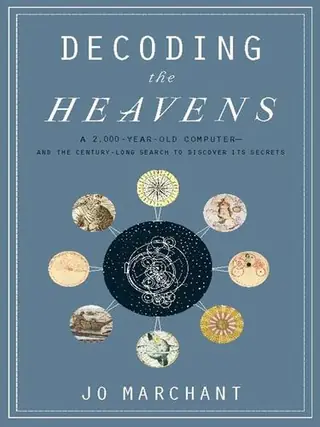
The bronze fragments of an ancient Greek device have puzzled scholars for more than a century after they were recovered from the bottom of the Mediterranean Sea, where they had lain since about 80 B. C. Now, using advanced imaging technology, scientists have solved the mystery of its intricate workings. Unmatched in complexity for a thousand years, the mechanism functioned as the world’s first analog computer, calculating the movements of the sun, moon, and planets through the zodiac. In Decoding the Heavens, Jo Marchant details for the first time the hundred-year quest to decode this ancient
Affiliate links. As an Amazon Associate I earn from qualifying purchases.
Darwin College Lecture Series: Decoding the Heavens: The Antikythera Mechanism by Jo Marchant "There are quite a few mentions of devices that sound a bit like the Antikythera mechanism" https://youtu.be/Iv-zWbxm2lY?t=2695 Jo Marchant is an award-winning…
on “Antikythera Mechanism: An ancient 'computer' that 'shouldn't exist' [video]” ↗…terror of Science by Richard Holmes (Harper Press) * What the Nose Knows: The science of scent in everyday life by Avery Gilbert (Crown Publishers) * Bad Science by Ben Goldacre (Harper Perennial) * Decoding the Heavens: Solving the mystery of the world's first computer by Jo Marchant (William Heinemann) * The drunkard's walk: How randomness rules our lives by Leonard Mlodinow (Penguin) * Your Inner Fish: The amazing…
on “2009 Royal Society Prize for Science Books” ↗…terror of Science by Richard Holmes (Harper Press) * What the Nose Knows: The science of scent in everyday life by Avery Gilbert (Crown Publishers) * Bad Science by Ben Goldacre (Harper Perennial) * Decoding the Heavens: Solving the mystery of the world's first computer by Jo Marchant (William Heinemann) * The drunkard's walk: How randomness rules our lives by Leonard Mlodinow (Penguin) * Your Inner Fish: The amazing…
on “2009 Royal Society Prize for Science Books” ↗