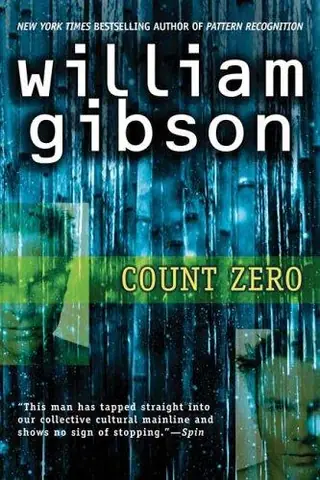
Count Zero
by William Gibson · first published 1986
31% recommend61% neutral8% critical
Why HN recommends it
Cyberpunk sequel to Neuromancer with fuller characters and a more suggestive, implication-driven style; admired for its prescient vision of the future and AIs in cyberspace. Best read after Neuromancer.
Summarised by Claude from recommending comments
Turner, corporate mercenary, wakes in a reconstructed body, a beautiful woman by his side. Then Hosaka Corporation reactivates him for a mission more dangerous than the one he's recovering from: Maas-Neotek's chief of R&D is defecting. Turner is the one assigned to get him out intact, along with the biochip he's perfected. But this proves to be of supreme interest to certain other parties--some of whom aren't remotely human. Bobby Newmark is entirely human: a rustbelt data-hustler totally unprepared for what comes his way when the defection triggers war in cyberspace. With voodoo on the Net
Affiliate links. As an Amazon Associate I earn from qualifying purchases.
Mentions per year
What Hacker News says
Related books
 2010–2026
Mona Lisa Overdrive
William Gibson
Recommended by 16 · mentioned by 5016 recommend · 50 mention16 recommend · 5016 recommend
 2007–2026
Neuromancer
William Gibson
Recommended by 296 · mentioned by 780296 recommend · 780 mention296 recommend · 780296 recommend
 2008–2026
Burning Chrome
William Gibson
Recommended by 25 · mentioned by 6225 recommend · 62 mention25 recommend · 6225 recommend
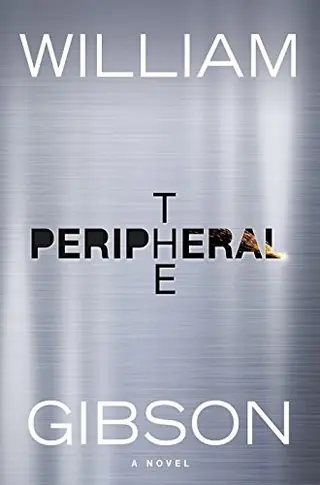 2014–2026
The Peripheral
William Gibson
Recommended by 32 · mentioned by 7232 recommend · 72 mention32 recommend · 7232 recommend
Slaughterhouse-Five, or The Children's Crusade
Kurt Vonnegut
Recommended by 2 · mentioned by 32 recommend · 3 mention2 recommend · 32 recommend
 2007–2026
Virtual light
William Gibson
Recommended by 18 · mentioned by 3918 recommend · 39 mention18 recommend · 3918 recommend
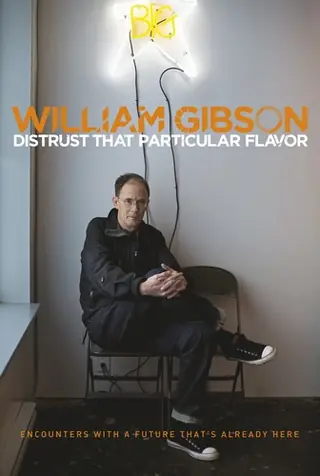 2012–2025
Distrust that particular flavor
William Gibson
Recommended by 7 · mentioned by 107 recommend · 10 mention7 recommend · 107 recommend
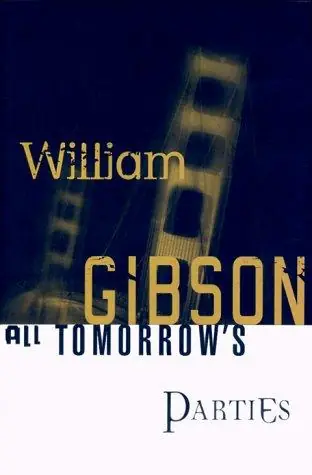 2007–2024
All Tomorrow's Parties
William Gibson
Recommended by 3 · mentioned by 93 recommend · 9 mention3 recommend · 93 recommend
…augmentations - slum-dwelling hackers who break in to corporate data stores Neuromancer brought all this and more in to popular consciousness in a blinding flash. After Neuromancer, Gibson came out with Count Zero (which I liked even more than Neuromancer itself) and Mona Lisa Overdrive (which wasn't nearly as good as either of the books that preceded it). I stopped reading Gibson after that.
on “The Influence of Neuromancer on Cyberpunk” ↗…childish, and not even in the same league as Neuromancer. I read Neuromancer originally in 1984 and again a few years ago, and for me it still holds up. It's not the greatest book or anything, and I found Count Zero to be much better, but apart from those two books I've yet to read anything else cyberpunkish that comes even remotely close. Before someone mentions Greg Egan or Vernor Vinge, as they have elsewhere…
on “The Influence of Neuromancer on Cyberpunk” ↗…recommend "Ubik", "The Three Stigmata of Palmer Eldritch", and "Martian Time Slip". And of his short stories, I'd recommend "Beyond Lies the Wub" and "Woof". Gibson's "Neuromancer" is alright, but "Count Zero" is better. Avoid the rest of his work. "Brave New World" is an incredibly overrated, heavy-handed propaganda novel, written without a shred of talent. Avoid. "Dune" is great, though I prefer the…
on “Sci-Fi Novels You Should Read” ↗Neuromancer gets a lot of attention because it was the first of Gibson's Sprawl trilogy, but for my money Count Zero is a far better book.
on “The Chemistry of William Gibson’s Neuromancer” ↗…It feels like they're setting fire to my hard work. But what can you do? To discount the future is part of human nature. Recommended reading: On the alienness of the immortal human: William Gibson's Count Zero. On the psychology of the immortal human: Doctorow's Down and Out in the Magic Kingdom is good. The much shorter, ha-ha-only-serious version is the tale of Wowbagger, the Infinitely Prolonged in Douglas…
on “Futurist Ray Kurzweil Pulls Out All the Stops (and Pills) to Live to Witness the Singularity” ↗…Gibson, along with many other people, believed the hype about AI twenty years ago. ;) Gibson's great because he notices things. For example, I will be eternally grateful for all the Joseph Cornell stuff in Count Zero because it prompted me to go see a show full of actual Joseph Cornell boxes, which are wonderful and are exactly as Gibson described them.
on “New Japanese Pop Idol Shocks Fans With News - She’s Not Real” ↗Read Count Zero and you will learn all about Joseph Cornell. Not facts, mind you, but you will learn what Cornell's work feels like. The Cornell exhibition I went to see is, alas, closed now: http://www.amazon.com/Joseph-Cornell-Lynda-Roscoe-Hartigan/d...…
on “New Japanese Pop Idol Shocks Fans With News - She’s Not Real” ↗>I realize now that Gibson's books monotonically decreased in quality. That's interesting, I always felt that Count Zero was the best of that trilogy. Neuromancer to me felt like he hadn't quite found his pacing yet, and the characterization in CZ was much fuller.
on “William Gibson: How I wrote Neuromancer” ↗I found Count Zero to be a far better book than Neuromancer. But that was a very, very long time ago (about when the books came out). So I'm not sure if I'd still like them, especially now that the themes in these books…
on ““Neuromancer” read by William Gibson” ↗Count Zero and Mona Lisa Overdrive by William Gibson (sequels to the more famous Neuromancer) have this idea. AIs obtain independence from humans in cyberspace (VR) and eventually make contact with AIs from elsewhere.
on “Computing and the Fermi Paradox: A New Idea Emerges – The Aliens Are All Asleep” ↗Neuromancer started it all, but I've always found Count Zero to be by far the best book in the trilogy.
on “Revisting Neuromancer After Three Decades” ↗Is anyone here a fan of Gibson's post Neuromancer trilogy work? After enjoying Neuromancer and loving Count Zero, I was pretty disappointed in Mona Lisa Overdrive, and that's when I stopped reading him, and I've heard his later work isn't so much scifi as very near-future social commentary, which doesn't really…
on “Tracking Reality’s “Fuckedness Quotient”: An Interview with William Gibson” ↗I tried reading it, and couldn't get in to it. It tried to be funny but wasn't (to my taste), and just seemed very childish. I liked Neuromancer and Count Zero much more.
on “The Influence of Neuromancer on Cyberpunk” ↗"The future is already here – it's just not evenly distributed." Gibson in 2003. I reread Neuromancer and Count Zero this past summer. Still incredible 25 years later. I kept stumbling across tech cliches then realizing Gibson was the original.
on “William Gibson says the future is right here, right now” ↗William Gibson: Neuromancer, Count Zero, Mona Lisa Overdrive Orson Scott Card: Enders Game Neil Stephenson: Snowcrash Isaac Asimov: The Foundation (series) I am not sure these qualify as space epics, but they are all good reads.
on “Ask HN: Do you know any amazing space epics?” ↗