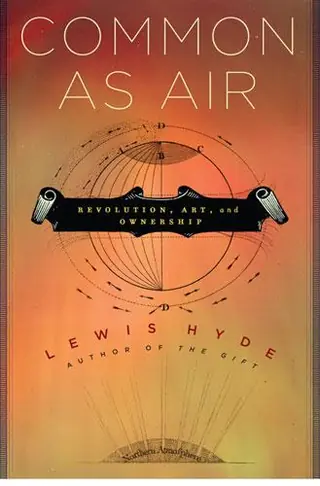
Common as air
by Lewis Hyde · first published 2010
4mentions
2recommended by
4HN commenters
2010–2025first – last mentioned
50% recommend50% neutral
In this lively, carefully argued, and well-documented book, Hyde brings the past to bear on present matters, shedding fresh light on everything from the Human Genome Project to Bob Dylan's musical root, revealing a vision of how to reclaim the commonwealth of art and ideas that we were meant to inherit.
Affiliate links. As an Amazon Associate I earn from qualifying purchases.
'Intellectual Property' doesn't exist at all, people just like to group copyright, trademarks and patents into the same term despite the separate, drastically different sets of laws backing them. Lewis Hyde's Common As Air is a good read on the framers' original intentions when it came to issues like this, and why our modern system is in violation of their original constitutional mandate. Personally enjoyed it more than…
on “Why Oracle’s Copyright Victory Over Google Is Bad News for Everyone” ↗For those of you interested in the history of intellectual property, copyright, and its "evolving principles", may I suggest the book Common as Air: Revolution, Art, and Ownership. http://www.amazon.com/Common-Air-Revolution-Art-Ownership/dp... Also, since we love hypothetical situations, how about this: I create a replication device that can…
on “Is Copyright Infringement Theft?” ↗…Anne's statute of 1710 there was no robust national legislation? Would that be better. I did mention there was precedent :) Really nice video on this _exciting_ topic btw Video talk on Hyde’s book, Common as Air: http://cyber.law.harvard.edu/interactive/events/2011/hyde
on “A Tipping Point Against The Copyright Monopoly Is A Lot Closer Than You Think” ↗…the public generally has access to very old works, and very modern works, but there' a big hole in the middle, especially for less popular works. Lewis Hyde discusses some aspects of this in his book "Common as Air". https://lewishyde.com/common-as-air/ In addition to the term of copyright, the way copyright is framed is antiquated - it assumes the presence of physical copies, and a lot of trouble stems from that.…
on “William Wordsworth's letter: "The Law of Copyright" (1838)” ↗