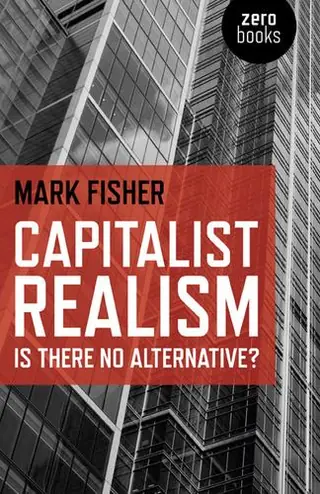
Capitalist Realism
Is There No Alternative?
by Mark Fisher · first published 2009
53% recommend45% neutral1% critical
Why HN recommends it
Short, approachable argument that capitalism has become the only imaginable system, tying politics, pop culture and philosophy together; suits readers wanting a framework for work, metrics and everyday malaise.
Summarised by Claude from recommending comments
It is easier to imagine the end of the world than the end of capitalism. After 1989, capitalism has successfully presented itself as the only realistic political-economic system - a situation that the bank crisis of 2008, far from ending, actually compounded. The book analyses the development and principal features of this capitalist realism as a lived ideological framework. Using examples from politics, film (Children Of Men, Jason Bourne, Supernanny), fiction (Le Guin and Kafka), work and education, it argues that capitalist realism colours all areas of contemporary experience, is anything b
Affiliate links. As an Amazon Associate I earn from qualifying purchases.
Mentions per year
What Hacker News says
Related books
 2018–2023
Ghosts of My Life
Mark Fisher
Recommended by 3 · mentioned by 73 recommend · 7 mention3 recommend · 73 recommend
 2009–2023
The Divided Self
R. D. Laing
Recommended by 7 · mentioned by 97 recommend · 9 mention7 recommend · 97 recommend
 2019–2023
Come as you are
Emily Nagoski, Blanca González Villegas
Recommended by 4 · mentioned by 44 recommend · 4 mention4 recommend · 44 recommend
 2011–2025
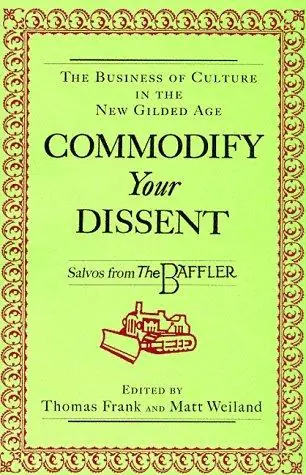
Commodify your dissent
Editors - Thomas Frank, Matt Weiland
Recommended by 5 · mentioned by 55 recommend · 5 mention5 recommend · 55 recommend
Outsider
Albert Camus, Ryota Kurumado
Recommended by 4 · mentioned by 44 recommend · 4 mention4 recommend · 44 recommend
 2009–2026
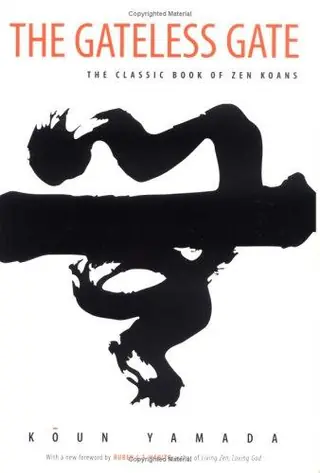
Gateless Gate
Koun Yamada
Recommended by 4 · mentioned by 74 recommend · 7 mention4 recommend · 74 recommend
 2016–2026
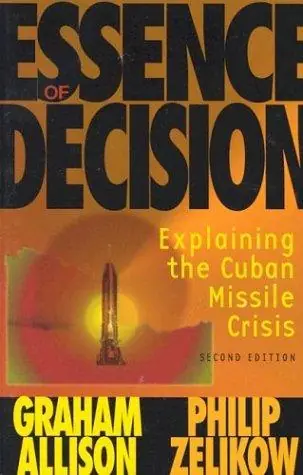
Essence of decision
Graham T. Allison
Recommended by 5 · mentioned by 55 recommend · 5 mention5 recommend · 55 recommend
Plague
Albert Camus, Laura Marris
Recommended by 8 · mentioned by 118 recommend · 11 mention8 recommend · 118 recommend
I sincerely never thought I'd see Fisher on HN. His work is fantastic, tying together politics, pop culture, and philosophy into a cogent reading of our times. I would recommend reading Capitalist Realism over Ghosts of My Life if you're looking to get a sense of his ideas, or, at least I found the latter to be a harder read to get into. Both are good. Younger folks have more and more trouble imagining…
on “Mark Fisher’s “K-punk” and the futures that have never arrived (2018)” ↗I'm sure this resonates with university lecturers all over the Western world. The late writer and university academic Mark Fisher has some interesting points about this effect in his 2009 book "Capitalist Realism: Is there no alternative?"[0]. He saw it as an inevitable byproduct of the infiltration of neo-liberal ideology into the academic sphere. Setting targets and measuring performance indicators are justified…
on “Every attempt to manage academia makes it worse” ↗I think the two key texts here are Graeber’s Bullshit Jobs and Mark Fisher’s Capitalist Realism, specifically his riff on “market Stalinism”: > The idealized market was supposed to deliver ‘friction free’ exchanges, in which the desires of consumers would be met directly, without the need for intervention…
on “The Rise of Performative Work” ↗Mark Fisher was the most important intellectual voice of our time. Capitalist Realism is a must-read: https://files.libcom.org/files/%5BMark_Fisher%5D_Capitalist_...
on “Mark Fisher’s “K-punk” and the futures that have never arrived (2018)” ↗capitalist realism by mark fisher, the divided self by r.d. laing, and absolute recoil by slavoj zizek, i suppose
on “Ask HN: Where does the evil go?” ↗Good question. I recommend the podcast Economic Update: https://player.fm/series/economic-update-with-richard-d-wolf... It’s also available on iTunes and all the podcast apps. For books, read Capitalist Realism by Mark Fisher. It’s a short read, too! While there are many recent books of nuanced interested in what created these problems, books on how to fix them are fairly unnecessary. Just be open minded, honest…
on “The State of American Wages 2017” ↗Try reading Capitalist Realism by Mark Fisher, from what you just said it sounds like you might really like it. He covers a lot of the themes you're talking about in a really approachable way As for what other conception of states…
on “Suicide rising across the US” ↗…of social media. * Postscript on the Societies of Control by Deleuze - short, insightful, somewhat prescient paper on the evolution of "control" mechanisms in postindustrial, capitalist societies. * Capitalist Realism: Is There No Alternative? by Mark Fisher - a very compelling analysis of the neoliberal postmodern condition, and how the cultural milieu has changed since the fall of the Soviet Union, and free-market…
on “Ask HN: 2018 Summer Reading List?” ↗For more along this train of thought, I recommend "Capitalist Realism: Is There No Alternative?" by Mark Fisher: https://en.wikipedia.org/wiki/Capitalist_Realism:_Is_There_N... I also highly, highly recommend "K-Punk" by the same author (now deceased, RIP): https://www.newyorker.com/books/page-turner/mark-fishers-k-p...
on “Nike and Boeing Are Paying Sci-Fi Writers to Predict Their Futures” ↗Excellent article, and to anyone interested in the topic, I'd suggest going beyond the review and reading Mark Fisher himself. His book, Capitalist Realism, as mentioned by the article, is short but an essential read to understand the politics of mental health: its current privatization at the hands of pharma companies and individualization at the hands…
on “A Future with No Future: Depression, the Left, and the Politics of Mental Health” ↗>Why the only alternatives to capitalism that come to mind are always China and Gulags? Is there absolutely nothing else we can imagine? This is precisely Mark Fisher's argument in Capitalist Realism. Capitalist realism dictates that the majority of people have become incapable of imagining something outside of a kind of binary choice. There can't be an alternate future, because we can't imagine it…
I actually think this is an interesting problem we face currently. I really liked Mark Fisher's book "Capitalist Realism" in which he touches on how we can no longer imagine a society outside of our capitalist one. I agree though, it's a hard future to sketch out.
on ““The Social Dilemma” Fails to Tackle the Real Issues in Tech” ↗you might be interested to learn from mark fisher's capitalist realism concept
on “Ask HN: What is with the new URLs on facebook.com?” ↗Capitalist Realism Flow Neuromancer Snow Crash What is Life? The Stranger special mention: David Pearce's archipelago of paradise engineering manifesto-websitelets
on “Ask HN: What books fundamentally changed the way you think about the world?” ↗Regarding the effect Capitalism has on all the other systems it encounters, I'd like to suggest you read Capitalist Realism by Mark Fisher (2009).[1] [1] https://en.m.wikipedia.org/wiki/Capitalist_Realism:_Is_there...
on “How corporates co-opted mindfulness to make us bear the unbearable (2015)” ↗