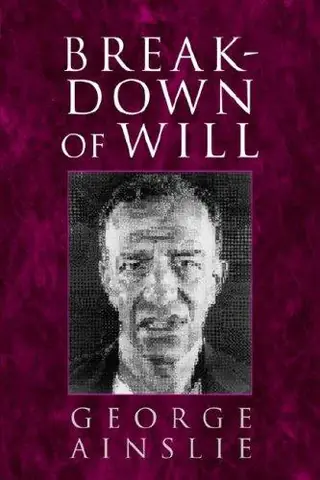
Breakdown of Will
by George Ainslie · first published 2001
2mentions
1recommended by
2HN commenters
2014–2019first – last mentioned
50% recommend50% neutral
"In this book, the researcher who originally proposed hyperbolic discounting theory presents new findings that confirm its validity and describes implications that undermine our most basic assumptions about how self-control works. Hyperbolic discounting theory has provoked much recent controversy in psychology, economics, and the philosophy of mind. It begins with an experimental finding: People devalue a given future event at different rates, depending on how far away it is. This phenomenon means that our preferences are inherently unstable and entails our present selves being pitted against
Affiliate links. As an Amazon Associate I earn from qualifying purchases.
Read "Breakdown of Will" by George Ainslie, if this is your first introduction to that word.
on “How Not to Die (2007)” ↗It's probably no coincidence that repeated prisoner's dilemna models another phenomenon: willpower. George Ainslie argues in "Breakdown of Will" that will is actually the result of negotiations between past and future selves. http://www.picoeconomics.org/HTarticles/Bkdn_Precis/Breakdow...
on “Eigenmorality” ↗