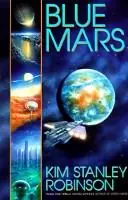
Blue Mars
by Kim Stanley Robinson · first published 1996
38% recommend55% neutral8% critical
Why HN recommends it
Final volume of the Mars trilogy, praised for well-researched, idea-rich depiction of terraforming and settling Mars, with an inspiring view of humanity. Suits readers who like dense, scientific sci-fi.
Common criticism: Some find it a slog, with slow, heavy pacing
Summarised by Claude from recommending comments
The red planet is red no longer, as Mars has become a perfectly inhabitable world. But while Mars flourishes, Earth is threatened by overpopulation and ecological disaster. Soon people look to Mars as a refuge, initiating a possible interplanetary conflict, as well as political strife between the Reds, who wish to preserve the planet in its desert state, and the Green "terraformers". The ultimate fate of Earth, as well as the possibility of new explorations into the solar system, stand in the balance.From the Paperback edition.
Affiliate links. As an Amazon Associate I earn from qualifying purchases.
Mentions per year
What Hacker News says
Related books
 2008–2026
Green Mars
Kim Stanley Robinson
Recommended by 12 · mentioned by 3512 recommend · 35 mention12 recommend · 3512 recommend
 2008–2026
Red Mars
Kim Stanley Robinson
Recommended by 56 · mentioned by 12156 recommend · 121 mention56 recommend · 12156 recommend
 2008–2024
Heretics of Dune
Frank Herbert
Recommended by 4 · mentioned by 134 recommend · 13 mention4 recommend · 134 recommend
 2007–2026
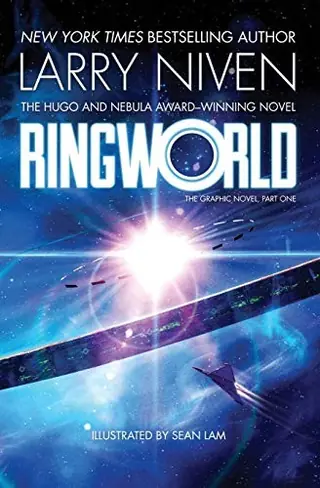
Ringworld
Larry Niven
Recommended by 51 · mentioned by 15951 recommend · 159 mention51 recommend · 15951 recommend
 2010–2026
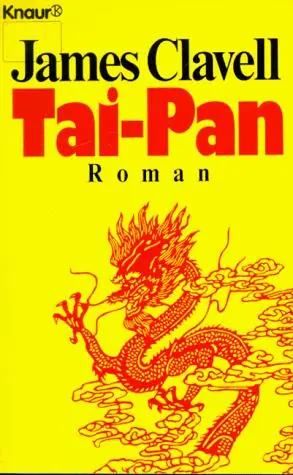
Tai-Pan (Asian Saga
James Clavell
Recommended by 7 · mentioned by 97 recommend · 9 mention7 recommend · 97 recommend
 2008–2026
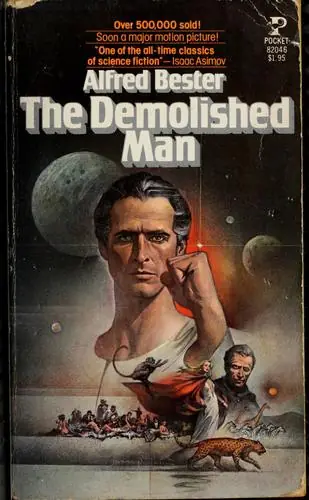
The Demolished Man
Alfred Bester
Recommended by 12 · mentioned by 1812 recommend · 18 mention12 recommend · 1812 recommend
 2010–2026
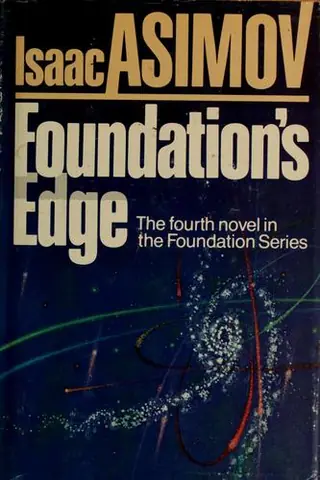
Foundation's Edge
Isaac Asimov
Recommended by 7 · mentioned by 217 recommend · 21 mention7 recommend · 217 recommend
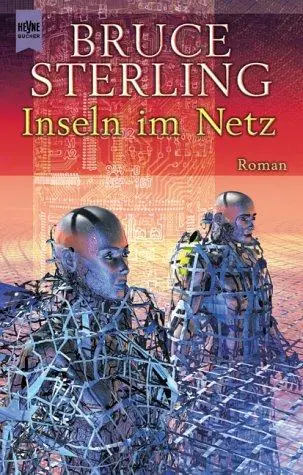 2012–2025
Islands in the Net
Bruce Sterling
Recommended by 8 · mentioned by 168 recommend · 16 mention8 recommend · 168 recommend
To cut to the chase we should ignore these concerns and begin plans for terraforming Mars. If you really want to go through the ins and outs of why this is the end-game, please read Red/Green/Blue Mars by Kim Stanley Robinson.
on “Keeping Mars Earth-free” ↗Also the Mars Trilogy (Red Mars, Green Mars, Blue Mars) by Kim Stanley Robinson. Honestly that's my favorite Sci-Fi novel series of all time. Just give Red Mars a try and I prosome you won't be able to put it down.
on “Japan starts space elevator experiments” ↗…basically all of it), Star Wars/Trek, etc. Other than Gibson's stuff, some of the truly spectacular sci fi I have read is the very-dense-and-not-at-all-thriller-ish Mars trilogy (Red Mars, Green Mars, and Blue Mars), and the fast-paced-and-awesome Spin by Robert Charles Wilson. That led me to read all of Wilson's books, many of which are also good. Also Haldeman is an author worth reading, though not all of his…
on “Ask HN: What literature do you read?” ↗…[...] does the interplanetary superpower suddenly becoming all the more willing to watch the world burn? If you're interested in fiction along those lines, Kim Stanley Robinson's Mars Trilogy (Red Mars, Blue Mars, Green Mars) seems right up your alley. I'm about half way through the first book, and it's starting to delve into whether or not the distant, Earth-based powers that financed initial settlement have…
on “Elon Musk argues that putting a million people on Mars ensures humanity's future” ↗I found the Mars Trilogy (Red Mars, Green Mars, Blue Mars) by Kim Stanley Robinson a very interesting, although of course, fictional account of the terraforming of Mars.
on “A material way to make Mars habitable” ↗Red Mars by Kim Stanley Robinson, followed by Blue Mars and Green Mars. These to me are the only ones not mentioned already and are set in an inspiring way that celebrates humanity. Also the Rama Series by Clarke and Lee starting with the second in the series…
on “Ask YC: What's the most inspiring sci-fi book you've read?” ↗The Mars trilogy[1] (Red Mars, Green Mars and Blue Mars) by Kim Stanley Robinson is a great tutorial on how we could approach such an endeavor. [1] http://en.wikipedia.org/wiki/Mars_trilogy
on “Moon Not Only Has Water, but Lots of It” ↗…tendency to get more philosophical in the later volumes (plans within plans within plans). If I had to choose an all time favorite I would probably go with Kim Stanley Robinson's Mars trilogy (Red/Green/Blue Mars). An extremely well researched view of how Mars colonization and terraforming might proceed in a realistic way. He also has a trilogy on the possible/likely consequences of runaway global warming (Forty…
on “Ask HN: What sci-fi books are you reading?” ↗In the Mars trilogy (Red Mars/Green Mars/Blue Mars) by Kim Stanley Robinson, the term "areology" was coined for describing geology-on-Mars. I always thought that was a great word.
on “Are Those Spidery Black Things On Mars Dangerous?” ↗That's odd. The first episode was the only one I watched and I don't remember that bit. It might have grabbed me. A terrorist attack on a space elevator is a pivotal plot point in Blue Mars by Kim Stanley Robinson, which IMHO is a better work in basically every way than Asimov's magnum opus.
on “Space Elevator” ↗…said: - Phylloxera: How Wine was Saved for the world by Christy Campbell is a surprisingly fun read on how the entire wine industry was almost destroyed in the late 19th century. - Red/Green/Blue Mars by K. S. Robinson hard sci-fi about mars colonization and terraforming. First rereading in 20 years or so. Holds up extremely well. - Ishmael by Daniel Quinn. A thought provoking take on how broad…
on “Ask HN: What did you read in 2025?” ↗Kim Stanley Robinson's Mars Trilogy, especially Green and Blue Mars, provide a nice fictional exploration of this idea. I think Mondragon may even be name dropped.
on “Mondragon Corporation – a federation of co-operatives” ↗"Edit: Can we get a Red/Green/Blue Mars miniseries on HBO, please? That would make my decade." (spoilers follow, although this book is 24 years old so if you haven't read it, you're probably never going to read it. Also Vader is Luke's father)…
on “Hollywood as We Know It Is Over” ↗Did you get to Green and Blue Mars? I didn't find the people or relationship issues to detract from the Mars trilogy because the personalities interweaves with the politics, and the inescapability of personalities and relationships being…
on “New sci-fi and fantasy books to check out this August” ↗That was in the novel 2312. Highly recommended for the scope of ideas, however far fetched they're presented well. I'm currently struggling 200 pages into Blue Mars. Great series though (I'm struggling with it due to life getting in the way, as opposed to it becoming a grind - although there's a bit of that too, but it's three 700-odd page novels...)
on “Saturn's largest moon may be the only place beyond Earth where humans could live” ↗