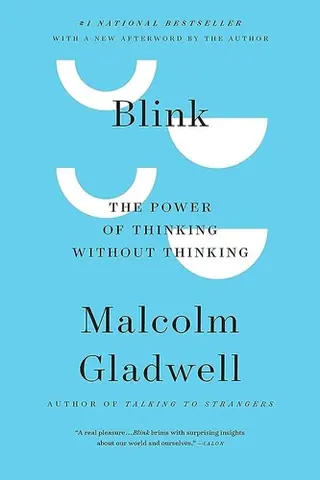
Blink
The Power of Thinking Without Thinking
by Malcolm Gladwell · first published 2004
22% recommend63% neutral15% critical
Why HN recommends it
Anecdote-rich look at snap judgments and thin-slicing, showing how intuition can beat over-analysis and how unconscious bias works; suits engineers and founders who distrust gut feel and want accessible psychology.
Common criticism: Critics say its theories are oversimplified and rest on anecdotes rather than testable science
Summarised by Claude from recommending comments
Intuition is not some magical property that arises unbidden from the depths of our mind. It is a product of long hours and intelligent design, of meaningful work environments and particular rules and principles. This book shows us how we can hone our instinctive ability to know in an instant, helping us to bring out the best in our thinking and become better decision-makers in our homes, offices and in everyday life. Just as he did with his revolutionary theory of the tipping point, Gladwell reveals how the power of 'blink' could fundamentally transform our relationships, the way we consume, c
Affiliate links. As an Amazon Associate I earn from qualifying purchases.
Mentions per year
What Hacker News says
Related books
 2007–2025
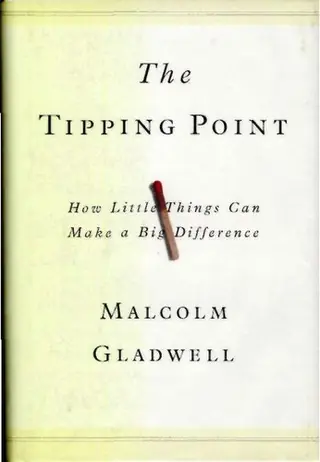
The Tipping Point
Malcolm Gladwell
Recommended by 31 · mentioned by 8731 recommend · 87 mention31 recommend · 8731 recommend
 2016–2023
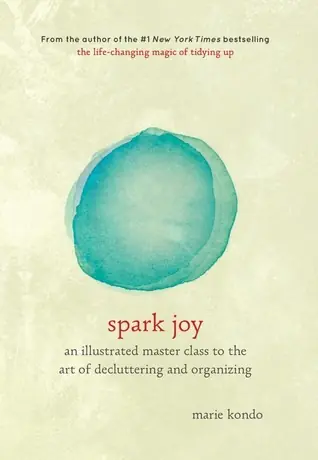
Spark Joy
Marie Kondo
Recommended by 3 · mentioned by 43 recommend · 4 mention3 recommend · 43 recommend
 2008–2026
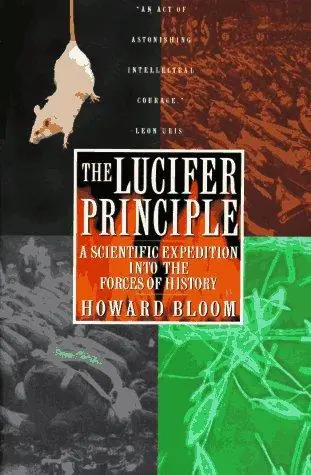
The Lucifer Principle
Howard Bloom
Recommended by 3 · mentioned by 43 recommend · 4 mention3 recommend · 43 recommend
 2008–2025
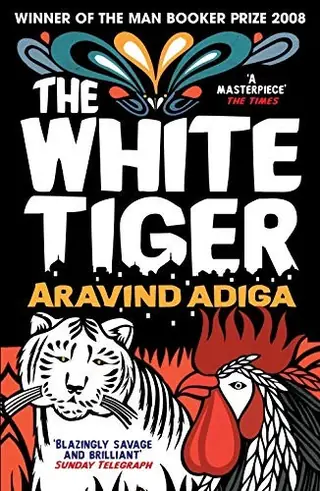
The White Tiger
Aravind Adiga
Recommended by 3 · mentioned by 53 recommend · 5 mention3 recommend · 53 recommend
 2009–2021
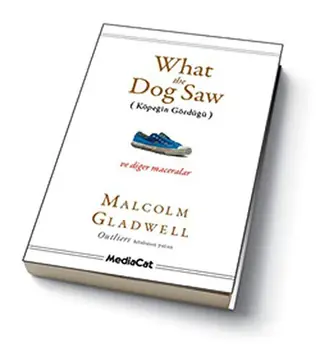
What The Dog Saw
Malcolm Gladwell
Recommended by 3 · mentioned by 83 recommend · 8 mention3 recommend · 83 recommend
 2009–2025
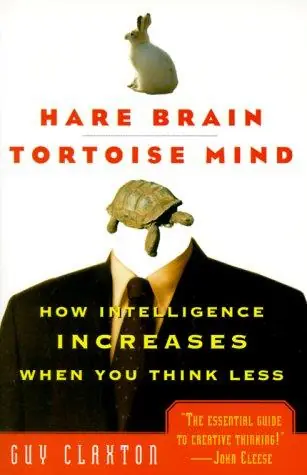
Hare Brain, Tortoise Mind
Guy Claxton
Recommended by 2 · mentioned by 42 recommend · 4 mention2 recommend · 42 recommend
 2008–2026
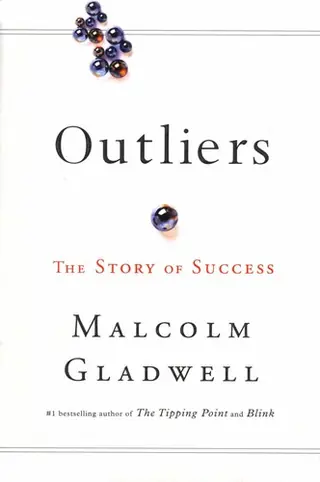
Outliers
Malcolm Gladwell
Recommended by 99 · mentioned by 30099 recommend · 300 mention99 recommend · 30099 recommend
 2007–2025
The Long Tail
Chris Anderson
Recommended by 7 · mentioned by 307 recommend · 30 mention7 recommend · 307 recommend
…- Richard Feynman This one is collection of events in the life of Feynman. He's mostly known for being a scientist, but he's equally talented in few other areas as well. An interesting and fun book. Blink: The Power of Thinking Without Thinking - Malcolm Gladwell Recommended if you are into psychology and knowing how our thoughts and actions are affected by our subconscious.
on “Ask HN: Books you read in 2017?” ↗You know in your gut who they are. If you haven’t read Blink by Malcolm Gladwell then read it. In our core we easily spot people’s inner character. We know VC Seagulls when we see them but we’re attracted to work with them because they have a brand name. They…
on “Beware of VC Seagulls, who shit on you and then fly away ” ↗…depending on the situation, it might be even more valuable than rational thinking. Especially on situations where rational thinking fails or where you have to make instant decisions. I suggest you read 'Blink' by Malcolm Gladwell. The author gives many examples of situations where spontaneous decisions yield better results compared to rational thinking methods.
on “Ask HN: Do you think intuition is as valuable as rational thinking?” ↗…shortcuts minds take which lead to wrong conclusions. Learn how to learn: http://news.ycombinator.com/item?id=1276882 Start asking smart questions: http://catb.org/~esr/faqs/smart-questions.html Read "Blink" by Malcolm Gladwell, discover that most of your thinking goes on without you trying at all. Read "The Gift of Fear" by Gavin DeBecker, our emotional responses to our world can be sources of surprisingly…
on “What scientific concept would improve everybody's cognitive toolkit?” ↗…psychology section and right next to them was a book with the title ADHD Does Not Exist. I didn't get a chance to take a peek at it because I was too occupied reading the first couple of pages from Gladwell's Blink which was pretty captivating.
on “Doctor: ADHD, as currently defined, does not exist” ↗…Greene Influence- Robert Cialdini 21st lessons for 21st century - Y. Harari Why we sleep -M. Walker Skin in the Game - Nassim T. Social Animal - David B. Einstein - Isaacson Steve Jobs - Isaacson Blink - malcolm gladwell Outlier - malcolm gladwell The tipping point - malcolm gladwell Game of Throne series
on “Ask HN: Best books you read in the past decade?” ↗…alone with other humans? Your error in this is that you assume the behaviour is conscious and deliberate. Our brains do many calculations before we are even aware of them. I recommend Gladwell's book "Blink" on the topic [1]. Humans are by all means social beings, and we use heuristics and mental shortcuts to simplify our world, leading to fast and unconscious decisions often to our own detriment. We construct…
on “Ask HN: Concepts that clicked only years after you first encountered them?” ↗Blink by Malcolm Gladwell.
on “Ask HN: What's one book that changed your life?” ↗…by John Battelle 4. "Made to Stick" by Chip Heath and Dan Heath 5. "The Tipping Point" by Malcolm Gladwell That should cover your trip. I've listened to all of them and really liked all of them. "Blink" by Gladwell is also good, but not as business related. I would love to hear any other suggestions people have in this category.
on “Ask YC: Road trip. Which audio books would you recommend?” ↗"I'm sorry but gut feel just doesn't cut it." Actually, it does. Read Blink: http://www.gladwell.com/blink/ by Malcolm Gladwell for a better idea of this. I can understand that you're looking for something more cut and dry, but it just doesn't exist. If you've got a problem…
on “hiring good employees. iq tests, what else?” ↗…For example, when they read something, their mind jumps to a "agree" or "disagree" state much faster than they can actually sit and think about why they feel that way. If you're interested, check out Blink (Gladwell) and Thinking Fast and Slow (Kahneman). Agree/Disagree trees like this nicely map into this "fast" thinking style.
on “Ask HN: Using plaintext argument maps to improve critical thinking?” ↗…what you think about Tony Robbins, you have to admit some of his ideas have traction. If you read enough of these books you'll find yourself making some improvements to your life. Malcolm Gladwell's "Blink", etc, were hugely impressive to me if only for his ability to tell the story of achievement and to make you believe genius-level ability is attainable, notwithstanding the allegations of plagiarism and…
on “The Necessity of Self-Help Lit” ↗Blink by Malcolm Gladwell. I have not received a ticket for a driving infraction since.
on “Ask HN: What was a book that changed your life?” ↗…book, but there's an entire chapter where Simon praises making decision by listening to one's gut feelings; especially within the context of being an entrepreneur. I am aware of Malcolm Gladwell's book "Blink". I love that book, and the way I interpreted it is that people who have both deep expertise and vast experience in a field, can often, but not always, sense end results with incomplete data. I get that,…
on “Decision making: going with your guts?” ↗…them different and what might explain your preference. You'll have to be careful--not to attribute like or dislike to the wrong things--but you will probably make progress sooner or later. See also "Blink", by Malcolm Gladwell.
on “Your taste is why your work disappoints you.” ↗