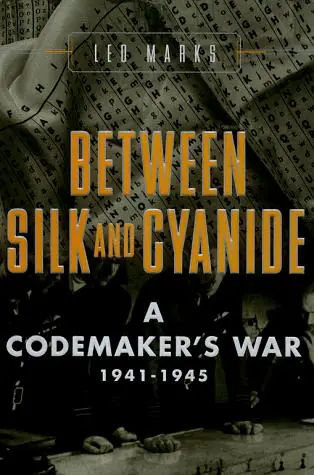
Between Silk and Cyanide
by Leo Marks · first published 1998
90% recommend10% neutral
Why HN recommends it
First-hand memoir by SOE's head of codes in WWII, covering agents' field cryptography, one-time pads on silk, operator fists, and a one-man push for secure codes; suits readers who want the human side of codemaking.
Summarised by Claude from recommending comments
The Special Operations Executive (SOE), a British WW2 group infiltrating Reich-dominated Europe, had during the War's early and middle years a continuing problem in certain parts of France. They would train new agents, drop them into French territory, note their contact with a local agent... and they were lost, presumed captured or killed. Two things needed to happen fast: first, a new network had to be built so fresh agents would not be compromised by the older, discovered network. And second, a code generation method must be implemented that did not give a field agent knowledge of how oth
Affiliate links. As an Amazon Associate I earn from qualifying purchases.
Mentions per year
What Hacker News says
Related books
 2013–2020
Cryptanalysis
Helen Fouché Gaines
Recommended by 4 · mentioned by 44 recommend · 4 mention4 recommend · 44 recommend
 2009–2026
Colossus
B. Jack Copeland
Recommended by 6 · mentioned by 86 recommend · 8 mention6 recommend · 86 recommend
 2007–2026
The Code Book
Simon Singh
Recommended by 98 · mentioned by 12198 recommend · 121 mention98 recommend · 12198 recommend
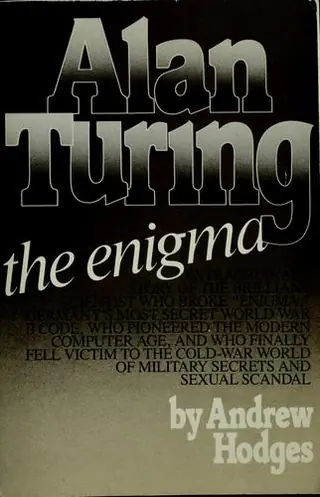 2008–2023
Alan Turing
Andrew Hodges
Recommended by 17 · mentioned by 2417 recommend · 24 mention17 recommend · 2417 recommend
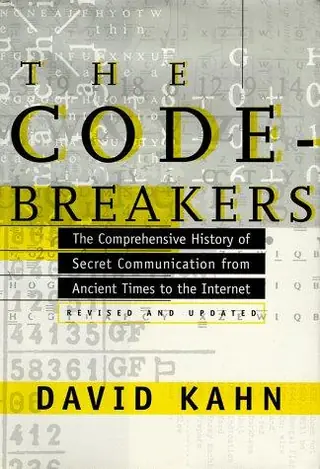 2008–2025
The codebreakers
David Kahn
Recommended by 17 · mentioned by 2617 recommend · 26 mention17 recommend · 2617 recommend
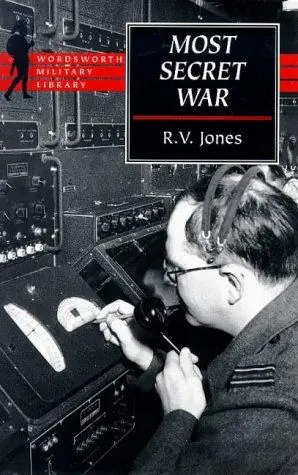 2010–2026
Most Secret War
R. V. Jones
Recommended by 16 · mentioned by 2716 recommend · 27 mention16 recommend · 2716 recommend
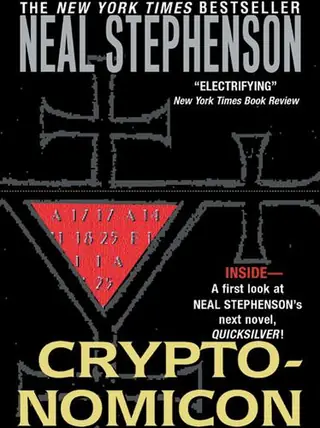 2007–2026
Cryptonomicon
Neal Stephenson
Recommended by 324 · mentioned by 628324 recommend · 628 mention324 recommend · 628324 recommend
…information, there are so many to choose from now but two of my favorites (one old and one more recent) [4] David Kahn, The Code Breakers, https://en.wikipedia.org/wiki/The_Codebreakers [5] Leo Marks, Between Silk and Cyanide: a Codemaker's Story 1941-1945 (this is less about cryptography and more about the practical problems of secret code and ciphers during WWII). * The Thomas Jefferson wheel cipher or Bazeries Cylinder…
on “Zodiac Killer: Code-breakers solve San Francisco killer's cipher” ↗…that it's isomorphic to a cypher which is the same except for some modifications which make it simpler. They may have proved that the fooling around with the jokers doesn't help, but I'm not sure. "Between Silk and Cyanide: A Codemaker's War, 1941-1945", by Leo Marks, goes into the practical problems of paper and pencil encryption systems in wartime. The British went into WWII using Playfair, which is a crappy transposition…
on “Problems with Bruce Schneier's “Solitaire” (2001)” ↗…traffic. They also decrypted all Japanese communications leading up to Dec 7, 1941, and after. Notably, the FBI never had any capacity for cryptanalysis. What they got, they got from the Friedmans. "Between Silk and Cyanide", by Leo Marks, is deeply enlightening, in particular about spycraft and its failings in Britain at the time.
on “Declassified Cold War code-breaking manual on solving 'impossible' puzzles” ↗…amusing that you would cite the example of the style of code keying of amateur radio operators. In WWII this was know as the "fist" of the operator. I refer you to appendix one of Leo Marks' excellent book "Between Silk and Cyanide" for just one account of how the opposing sides were able to study and fake each others' styles to create subterfuge. (You can thank me later for turning you on to a fantastic read.) There may not be…
on “US Govt Data Shows Russia Used Outdated Ukrainian PHP Malware” ↗…fit nearly so well. This is a great book to describe the practical use of crypto by agents and troops in the field in WWII: http://www.amazon.com/Between-Silk-Cyanide-Codemakers-1941-1... Leo Marks - Between Silk and Cyanide: A Codemaker's War, 1941-1945
on “Has World War II carrier pigeon message been cracked?” ↗I recommend "Between Silk and Cyanide" by Leo Marks.
on “How the World's First Computer Was Rescued from the Scrap Heap (2014)” ↗…occupied Europe. This was done so the Germans had to broadcast their signals via wireless, allowing Turing and Bletchley Park to intercept and break them much more often. I highly recommend a book called Between Silk and Cyanide, written by the head of codes (cryptography) of SOE during World War II.
on “The British Government should apologize to Alan Turing” ↗The flip side of this is the Allied codemaking operation, which was a hell of a thing as well. Between Silk and Cyanide is an account by Leo Marks, the man in charge of that effort. It's a fantastic read. http://amzn.com/0684864223
on “Code-Breakers: Bletchley Park's Lost Heroes” ↗Apart from Singh's incredibly famous one, I also quite enjoyed _Colossus: The secrets of Bletchley Park_[1] for technical history. The autobiography of Leo Marks: _Between Silk & Cyanide_[2] was a good (although I suspect quite heavily dramatised & exaggerated) read about the more human elements and flaws of pen & paper crypto used by the allied resistance groups. [1] http://www.amazon.co.uk/Col
on “An Enigma cipher machine implemented in an Excel spreadsheet by a non-programmer” ↗Thanks for the comments. I thoroughly enjoyed Between Silk and Cyanide. A small correction, the Playfair is actually a substitution cipher (mapping diagrams to diagrams) not a transposition cipher. The Playfair is a paper and pencil cipher that can usually be broken by hand…
on “Problems with Bruce Schneier's “Solitaire” (2001)” ↗"Battle of Wits" by Stephen Budianski "Colossus" by Jack Copeland "Between Silk and Cyanide" by Leo Marks
on “WWII Bombe operator Ruth Bourne: I'd never heard of Enigma until after the war” ↗For those interested in Bletchley Park, it features prominently in the book Between Silk and Cyanide: A Codemaker's War by Leo Marks. I read it maybe 10 years ago and it has a lot of good stuff about WWII codes and spying.
on “Bletchley Park: New crisis for code-breaking hub” ↗…Codebreakers". If you're interested a good story about a one-man struggle to get British secret agents in WWII to start using reasonably secure codes (especially unbreakable one-time-pads), I recommend "Between Silk and Cyanide" by Leo Marks. A stronger version of the British double-transposition code that Leo Marks hated is the Soviet VIC cipher[0], which only has about 38 bit key strength, but is surprisingly strong for a…
on “Codebreaking: A Practical Guide” ↗> R.V. Jones' Most Secret War Added to my reading list. Have you read Between Silk and Cyanide by Leo Marks? It's quite good.
on “Does Your Office Have a Library?” ↗I recently read Between Silk and Cyanide, the autobiography of the guy who made the codes for the OP's SOE. https://www.amazon.com.au/Between-Silk-Cyanide-Codemakers-19... He's the guy who came up with the idea of using silk for codes, as…
on “The WWII Spy Who Hid Codes in Her Knitting” ↗