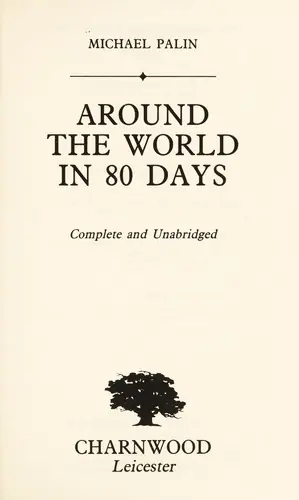
Around the World in Eighty Days
by Michael Palin · first published 1989
71% recommend29% neutral
Why HN recommends it
Jules Verne's adventure novel, praised as a favorite among his works for its plot built on the accurate science and travel of its day; suits readers who enjoy classic adventure and early science fiction.
Summarised by Claude from recommending comments
Affiliate links. As an Amazon Associate I earn from qualifying purchases.
Mentions per year
What Hacker News says
Related books
 2010–2024
Around the World in Eighty Days
Jules Verne, George Makepeace Towle
Recommended by 6 · mentioned by 96 recommend · 9 mention6 recommend · 96 recommend
 2014–2020
Journey to the Centre of the Earth
Jules Verne
Recommended by 5 · mentioned by 75 recommend · 7 mention5 recommend · 75 recommend
 2011–2025
Around the World in 80 Days
Jules Verne
Recommended by 3 · mentioned by 143 recommend · 14 mention3 recommend · 143 recommend
 2011–2025
Twenty thousand leagues under the sea
Jules Verne
Recommended by 7 · mentioned by 207 recommend · 20 mention7 recommend · 207 recommend
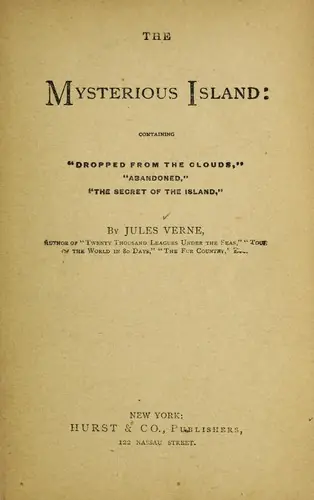 2007–2025
The mysterious island
Jules Verne
Recommended by 32 · mentioned by 5132 recommend · 51 mention32 recommend · 5132 recommend
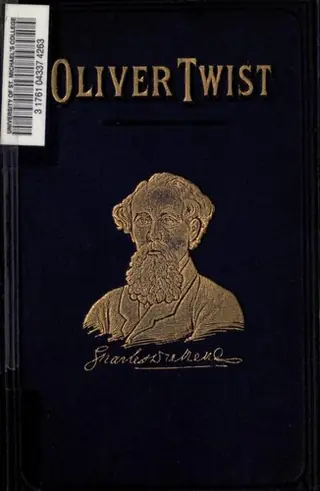 2008–2026
Oliver Twist
Charles Dickens
Recommended by 9 · mentioned by 409 recommend · 40 mention9 recommend · 409 recommend
 2009–2026
Alice in Wonderland
Lewis Carroll
Recommended by 31 · mentioned by 10431 recommend · 104 mention31 recommend · 10431 recommend
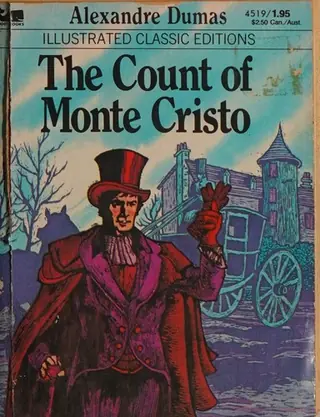 2009–2026
The Count of Monte Cristo
Alexandre Dumas
Recommended by 128 · mentioned by 260128 recommend · 260 mention128 recommend · 260128 recommend
…Verne. Those books were really ahead of its time. He was a prolific and best Sci-fi writer. I would like to mention few of his works like 20,000 leagues under the sea, journey to the center of earth and Around the World in Eighty Days. https://en.wikipedia.org/wiki/Jules_Verne
on “Ask HN: What are your favorite books or essays written at least 100 years ago?” ↗…of the time in quite a bit of accurate detail. Starting with that as the premise, he then runs with the idea to create the plot. The result is both science and science fiction. My favorite is still "Around the World in Eighty Days". A Jules Verne novel was rediscovered not long ago: "Paris in the Twentieth Century".
on “Jules Verne’s Most Famous Books Were Part of a 54-Volume Masterpiece” ↗The Bible. Mysterious Island (1874), Around the World in Eighty Days (1873), and other books by Jules Verne. Books by James Fenimore Cooper. The Sea-Wolf (1904) by Jack London. The Count of Monte Cristo (1844) by Alexandre Dumas. Oliver Twist (1839) by Charles Dickens.
on “Ask HN: What are your favorite books or essays written at least 100 years ago?” ↗Mind expanding read. Tangent. Made me want to read Around the World in Eighty Days. Here's a public domain ePub version: https://www.gutenberg.org/ebooks/103
on “A man whose software ate the world” ↗Jules Verne. Any would be good, but particularly Around the World in Eighty Days.
on “What are great books for boys?” ↗Reading Robur the Conqueror was quite a trip when I first picked it up from Project Gutenberg. It made me suspect that the versions of the more well-known novels like 20,000 Leagues, Earth to the Moon, Around the World in Eighty Days and Journey to the Center of the Earth that I'd read from the shelves of my school library had been considerably bowdlerized.
on “Jules Verne’s Most Famous Books Were Part of a 54-Volume Masterpiece” ↗…governments. The text later contradicts itself too: > In part, this betrayed how much Verne and his readers took a world of empire for granted: after all, circumnavigation with the ease described in Around the World in Eighty Days was only possible because of empire. Verne depicted a journey that simultaneously relied on a velocity and connectivity only possible because of globe-spanning imperial transport and communication networks,…
on “Machine conquest: Jules Verne's technocratic worldmaking” ↗