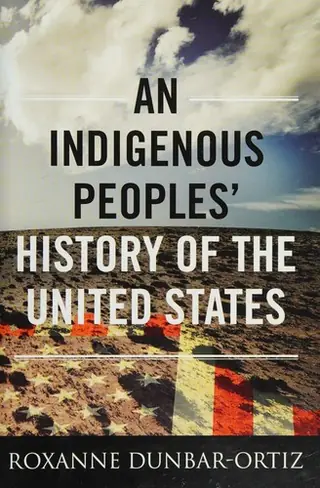
An Indigenous Peoples' History of the United States
by Roxanne Dunbar Ortiz · first published 2014
4mentions
3recommended by
4HN commenters
2015–2024first – last mentioned
75% recommend25% neutral
Today in the United States, there are more than five hundred federally recognized Indigenous nations comprising nearly three million people, descendants of the fifteen million Native people who once inhabited this land. The centuries-long genocidal program of the US settler-colonial regimen has largely been omitted from history. Now, for the first time, acclaimed historian and activist Roxanne Dunbar-Ortiz offers a history of the United States told from the perspective of Indigenous peoples and reveals how Native Americans, for centuries, actively resisted expansion of the US empire. With g
Affiliate links. As an Amazon Associate I earn from qualifying purchases.
Very interesting visualization. It complements the recent release of An Indigenous Peoples' History of the United States by Roxanne Dunbar-Ortiz, an excellent introduction to a consistently ignored aspect of US History. http://www.beacon.org/An-Indigenous-Peoples-History-of-the-U...
on “The Invasion of America: New Visualizations of Native American Dispossession” ↗…brilliantly painted analogy. I hope you find these texts offer some compelling augmentations to your understanding. 1) Eduardo Galeano's "The Open Veins of Latin America" 2) Roxanne Dunbar-Ortiz' "An Indigenous Peoples' History of the United States" 3) CrimethInc's "No Wall They Can Build"
on “Anxiety and burnout: why kids are consumed with worry” ↗Roxanne Dunbar-Ortiz's An Indigenous Peoples' History of the United States from 2014 is very illuminating of the strategy of colonization and empire building in the US. It also connects the dots to the present day very well.
on “The Best History Books 2018” ↗…what our true aspirations in life are, and hence if we do achieve financial independence, we often feel something is missing An example of this can be learned from the book by Roxanne Dunbar Ortiz, "An Indigenous Peoples' History of the United States" where she talks about how, before the Genocide dessimated their societies and cultures, the indigenous peoples had a lot more time for recreation, ceremony, and arts than the europeans did. This tells…
on “Ask HN: Achieved Professional Goals but Feel Lost–What's Next?” ↗