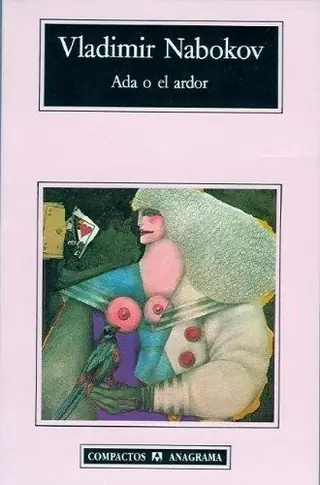
Ada
by Vladimir Nabokov, Bruno Oddera, Karen Mathiasen, Søren Hansen · first published 1969
70% recommend30% neutral
Why HN recommends it
The prose is rich and beautiful, enchanting at the level of whole chapters and individual sentences. It suits readers who enjoy dense, demanding, language-driven novels.
Summarised by Claude from recommending comments
Two young children engage in an inocent tryst only to later discover a wonderful and terrible secret about themselves. "The arbors and ardors of Ardis."
Affiliate links. As an Amazon Associate I earn from qualifying purchases.
Mentions per year
What Hacker News says
Related books
 2008–2026
Lolita
Vladimir Nabokov
Recommended by 41 · mentioned by 11741 recommend · 117 mention41 recommend · 11741 recommend
 2020–2026
King Solomon's Mines
H. Rider Haggard
Recommended by 4 · mentioned by 124 recommend · 12 mention4 recommend · 124 recommend
Eugene Onegin
Alexander Pushkin
Recommended by 4 · mentioned by 174 recommend · 17 mention4 recommend · 174 recommend
 2009–2026
The Waste Land
T. S. Eliot
Recommended by 14 · mentioned by 3614 recommend · 36 mention14 recommend · 3614 recommend
Notes from the Underground
Fyodor
Recommended by 21 · mentioned by 3321 recommend · 33 mention21 recommend · 3321 recommend
 2008–2026
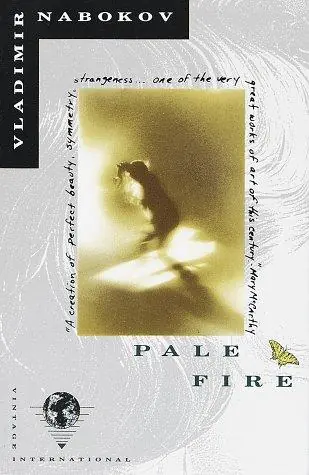
Pale Fire
Vladimir Nabokov
Recommended by 41 · mentioned by 8041 recommend · 80 mention41 recommend · 8041 recommend
 2008–2026
A Confederacy of Dunces
John Kennedy Toole
Recommended by 41 · mentioned by 7041 recommend · 70 mention41 recommend · 7041 recommend
 2010–2026
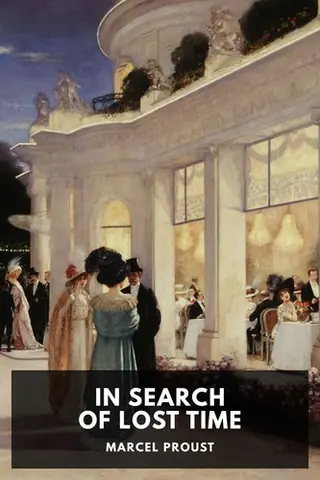
In Search of Lost Time
Marcel Proust
Recommended by 24 · mentioned by 6724 recommend · 67 mention24 recommend · 6724 recommend
You know what's full of explicit incest? Nabokov's Ada, or Ardor. It's also one of the most beautiful books I've ever read. But it looks like it's not available on Kindle either, now that I check :) http://www.amazon.com/Ada-Ardor-Chronicle-Vladimir-Nabokov/d...
on “Amazon Taking Down Erotica, Removing From Kindles” ↗I enjoyed it, but if you want epic Nabokov, check out ADA. It's a HUGE book, but very rewarding if you have the patience.
on “Ask HN: Interesting (Non software) books?” ↗In the "huge book filled with brilliant stuff but not for everybody" genre, I recommend ADA by Vladimir Nabokov. Great stuff.
on “Do you read?” ↗As much as I enjoyed both Pale Fire and Ada, or Ardor: A Family Chronicle, I cannot, in good conscience, let these be the only Nabokov books to be mentioned here. Having read all his nonfiction and his autobiography over the past three years,…
on “Ask HN: Interesting (Non software) books?” ↗…surely true but generally works we think of as being of merit challenge the reader. A lot of Borges stories come to mind. Stanislaw Lem's work like Solaris, on moral issues surely Nabokov's Lolita or Ada or Ardor. The Master and Margarita in the Soviet Union, Le Guin's the Left Hand of Darkness with takes on sexuality way ahead of their time and so on. If I go through my list of favourite books there's…
on “Why We Fight over Fiction” ↗…Fire on a re-read, but I'd recommend something else by him (or a few palate-cleansing/getting deeper on the Nabokov vibe choices) if it left you cold. It left me a little cold, too. I've been re-reading Ada or Ardor recently which I'd say is really outstanding, if longer and more florid than Lolita.
on “Don't be terrified of Pale Fire” ↗…is the joy of the language, the way it sings uniquely, and the way this song builds or subsums the world. That's my take on what Nabokov meant when he said a great writer is an enchanter. Nabokov's "Ada or Ardor" is an enchantment, as a whole and fractally, down to each single sentence, to each single word. Proust's "A la recherche du temps perdu" is an enchantment, a very long river of neverending sentences.…
on “James Joyce's "Ulysses": Why you should read this book” ↗A read I enjoyed in college was Ada, or Ardor by Nabokov.
on “Dostoyevsky Isn't Difficult” ↗Nabokov's Ada is given similar hypertextuality here: http://www.ada.auckland.ac.nz/
on “Hypertextuality: how a programmer reads TS Eliot's 'The Waste Land'” ↗…Nabokov would be so crass as to write himself into Humbert, but he shows a lot of sly sympathy for him in Lolita, and his other books also show a preoccupation with transgressive sexuality in children (Ada), it's a weird obsession.
on “My Dad Published Lolita” ↗…Guin - Rocannon's World (1966) Ursula K. Le Guin - The Dispossessed (1974). Ursula K. LeGuin - The Lathe of Heaven (1971) Ursula K. Le Guin - The Left Hand of Darkness (1969) Vladimir Nabokov - Ada, or Ardor (1969) Vonda N. McIntyre - Dreamsnake (1978) Walker Percy - Love in the Ruins (1971) William Burroughs - Nova Express (1964)
on “New Wave Sci-Fi: 75 Best Novels of 1964–1983” ↗