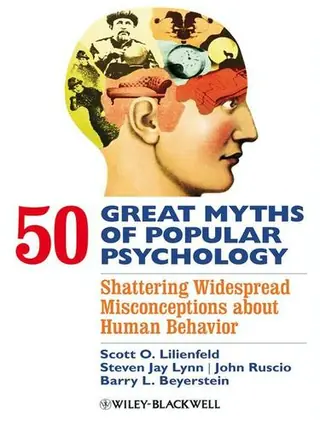
50 Great Myths of Popular Psychology
by Scott O. Lilienfeld, Steven Jay Lynn, John Ruscio, Barry L. Beyerstein · first published 2009
50% recommend50% neutral
50 Great Myths of Popular Psychology uses popular myths as a vehicle for helping students and laypersons to distinguish science from pseudoscience. Uses common myths as a vehicle for exploring how to distinguish factual from fictional claims in popular psychology Explores topics that readers will relate to, but often misunderstand, such as "opposites attract," "people use only 10% of their brains," and handwriting reveals your personality Provides a "mythbusting kit" for evaluating folk psychology claims in everyday life Teaches essential critical thinking skills through detailed discus
Affiliate links. As an Amazon Associate I earn from qualifying purchases.
50 Great Myths of Popular Psychology
on “Ask HN: Interesting (Non software) books?” ↗…many links to more criticism of the concept: https://en.wikipedia.org/wiki/Learning_styles#Criticism For instance: Psychologists Scott Lilienfeld, Barry Beyerstein, and colleagues listed as one of the "50 great myths of popular psychology" the idea that "students learn best when teaching styles are matched to their learning styles", and they summarized some relevant reasons not to believe this "myth".
on “An introduction to Japanese” ↗