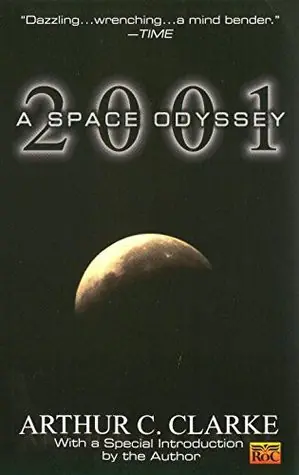
2001
A Space Odyssey
by Arthur C. Clarke · first published 1968
33% recommend67% neutral
A novel that proposes an idea about how the human race might have begun and where it might be headed...given a little help from out there. A colaboration of ideas with director Stanley Kubrick in the late 1960's it begins at "the dawn of man" and then leaps to the year 2001 where a mission to Saturn (Jupiter in the film) is mounted to try and answer questions raised by the discovery of an ancient artifact dug up on the moon. Though not particularly fast paced, the science is good, and there are a few hair raising events. There are also interesting speculations about the future, such as the spa
Affiliate links. As an Amazon Associate I earn from qualifying purchases.
…hard SF, has always tackled grown up questions. Here are a few I have recently re-read: The Dispossessed by Ursula K. Le Guin, Saturn's Children by Charles Stross, Engines Of Light by Ken McLeod, 2001 by Arthur C. Clarke, Robots of Dawn, etc. by Isaac Asimov.
on “Adults' obsession with science fiction causing society to become infantilised” ↗There is no "canon" explanation for the film, since Kubrick did not provide one, and 2001 was, at heart, his movie, independent in significant respects from Clarke's novelization and later sequels. That being said, I think the onscreen evidence for Clarke's version is compelling. Most notably,…
on “The Case for HAL's Sanity” ↗Well, kinda, eventually. The book of 2001 points Discovery 1 at Iapetus, a moon of Saturn. Evidently, the special effects crew for the movie couldn't do a convincing job of faking Saturn because of the rings so they did Jupiter instead. Then…
on “NASA’s Webb Finds Carbon Source on Surface of Jupiter’s Moon Europa” ↗